Wednesday, 5 August 2015

Twitter Ads Campaigns: A Simple Setup Guide

twitter ads
Twitter is a great marketing channel for driving traffic and generating leads. In fact42% of Twitter users follow brands or companies, which means if you’re not using Twitter for your business yet, you should learn how to integrate Twitter into your social media marketing strategy.
If you do already have a Twitter account set up for your business, you might consider supplementing your organic efforts with some of the paid promotional opportunities that Twitter offers. Using Twitter Ads is an easy way to get your tweets in front of larger audiences than just those who follow you, which is particularly useful if you’re looking to generate more new leads for your database. And you don’t necessarily have to spend a fortune on it, either -- Twitter ads can be effective even on a relatively small budget.
So, how do you get started? Let’s go ahead and walk through the four basic steps to setting up your Twitter ad campaigns, and how to decide on the best structure for your campaigns.

4 Steps to Set Up a Twitter Ads Campaign

Step 1: Choose Promoted Tweets vs. Promoted Accounts

The first decision you need to make when setting up your Twitter ads is whether you’d like to promote your tweets, or promote your Twitter account.
What’s the difference? Promoting tweets will allow your tweets to appear in users’ Twitter streams or in Twitter search results, whereas promoting your account will display your username under the “Who to Follow” section in users’ homepages.
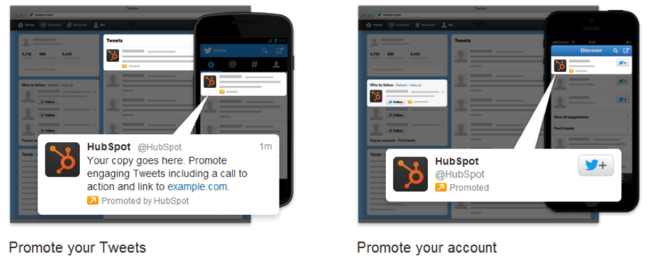
Promoted Tweets vs. Promoted Account
How do I choose? If you’re simply looking to grow your follower base and build up your audience, Promoted Accounts is a good choice. However, if your primary goal is lead generation, you’ll definitely want to put your money toward Promoted Tweets. Why? Because promoting tweets instead of your account allows you to craft those tweets to promote your content and links to your landing pages, where these Twitter users can then convert on your offers and become leads. Promoted tweets give you a lot more flexibility in terms of the content you’re choosing to show to your audience, so when in doubt, I’d recommend selecting this option.

Step 2: Select Primary Targeting Criteria

The next step in setting up your campaign will be determining your targeting criteria. It’s important to customize your audience to be a good fit for your company and your message, and that way you’re only paying for clicks from folks who might have some interest in downloading your content or learning more about your product or service. A more targeted audience is more likely to help you generate qualified leads.
What are my options? You can target your campaigns by interests and followers, or by keywords (only if you’re promoting tweets, not accounts). Twitter now also has a Tailored Audiences feature, which gives you the option to target your website visitors or lists pulled from your database. 
What’s the difference? Targeting by interests and followers allows you to create a list of Twitter usernames, and then target users whose interests are similar to the interests of those users’ followers. A great use of this type of targeting is compiling a small list of the top influencers in your industry. For example, to promote  How to Use Twitter for Business ebook, I’ll want to target an audience of users interested in social media. Targeting by interests and followers allows me to say, “show these tweets to people who are like Mike Volpe’s, Social Media Examiner’s, and Social Media Today’s followers,” and then I’ve created a large audience that’s still tailored to the topic of my content.
With this targeting option, you can also add a list of interest categories -- so I could say, for example, “show these tweets to people interested in Marketing, Social Media, or Lead Generation.” Again, this creates a broad audience focused on the topic of the content or products you’re promoting.
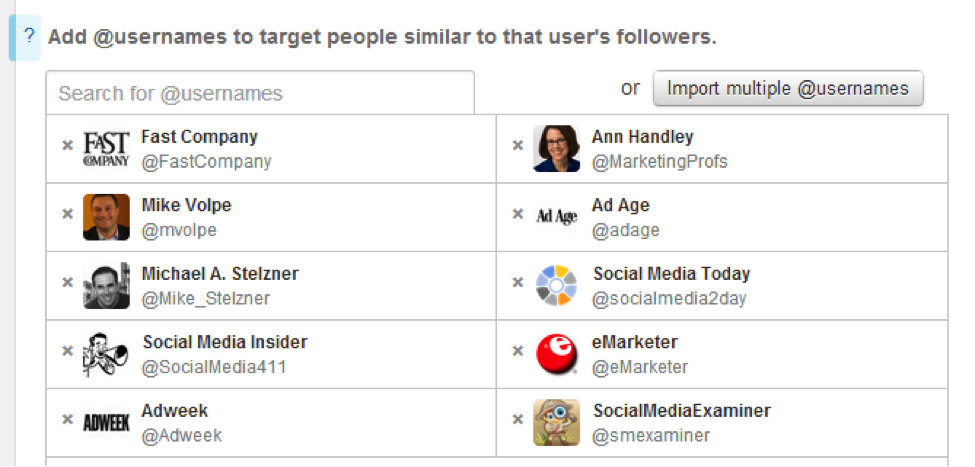
Targeting by interests and followers
Targeting by keywords allows you to reach people that search, tweet about, or engage with specific keywords. You can also choose to have your tweets appear in either users’ timelines or in search results. The benefit of this type of targeting is that it helps you define a more qualified audience, since these people are actively looking for or engaging with those specific keywords that are relevant to your offer.
So if I’m promoting NIVIINFOTECH How to Use Twitter for Business ebook, I might set up a keywords-based campaign with some related keywords, like this:
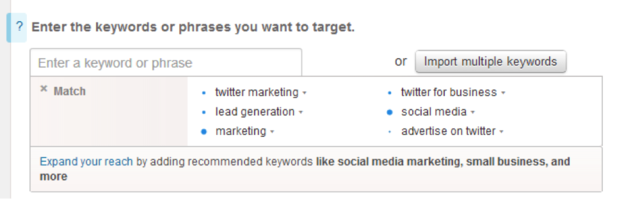
Targeting by keywords
Twitter also included a feature that recommends additional keywords to include in your campaign (just click on “Expand your reach”) so you can make sure you’re not missing out on any highly-searched relevant terms:
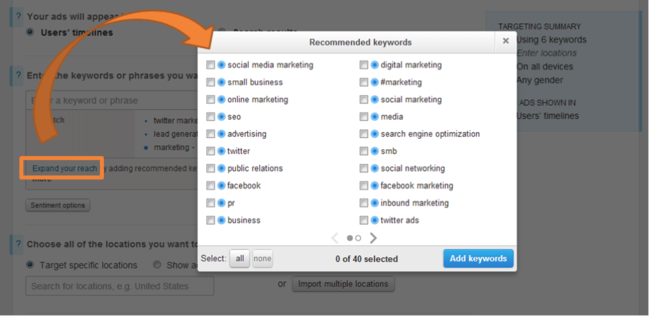
Expand your reach feature
Finally, targeting Tailored Audiences allows you to run retargeting campaigns through Twitter. You'll need to work with one of Twitter's ads partners to build audiences based on pixels on your site or by matching lists from your database. This option is a bit more complicated, so I'd recommend reading up on the details here.

Tailored Audiences
How do I choose? Targeting by interests and followers is best if you’re looking to get in front of new audiences, or if you’re looking to focus more on brand publicity. This option will yield a larger, less qualified audience. Targeting by keywords, on the other hand, is useful if you’re looking for users with potential product interest or purchase intent. This option will give you a smaller but more qualified audience.
Note: I’d recommend trying both types of targeting. Set up an A/B test where you have a campaign of each type with the same tweets, and see which performs better for you.. If you're looking to do more advanced retargeting, try Tailored Audiences.

Step 3: Choose From Additional Targeting Options

What are my options? Beyond targeting certain interests and keywords, you can also choose to target your audience by location, device, and gender.
How do I choose? You’ll want to target by location if you run a local business, or if you sell primarily to specific regions (whether that’s your city or North America).
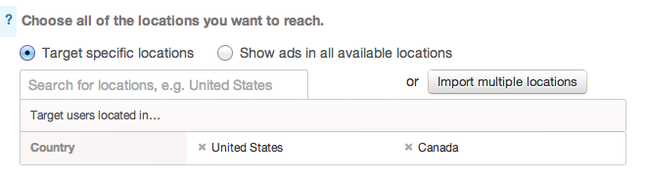
Target by location
You can also select which devices you’d like your promoted tweets to be displayed on -- any combination of desktop and the various mobile devices. This is a great targeting option if your product or service caters more specifically to people on the go, or if your website visitors are most likely to convert on your offer when they’re in the office.
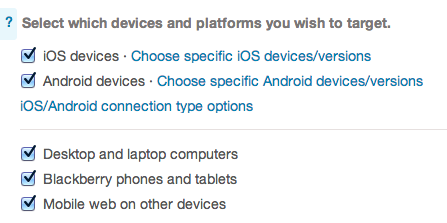
Target by device
Finally, if your product or service caters primarily to either males or females, you should take advantage of the gender targeting option.
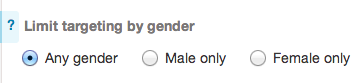
Target by gender

Step 4: Create Your Tweets

This is the fun part! Once you’ve determined the structure of your campaigns and your target audience, go ahead and create the tweets you’d like to promote. You can either select from existing tweets in your account, or create new ones.
When crafting a new tweet, click on the eye icon to select delivery type -- standard (which will promote it immediately to your followers just like an organic tweet), or promoted-only (which will only promote it through your Twitter Ads campaign).
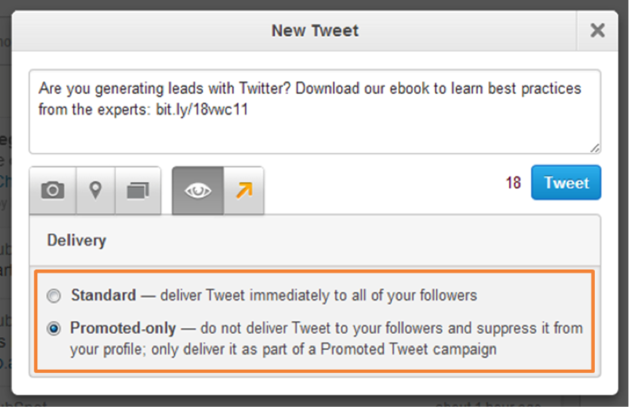
Create your promoted tweets
And there you have it! Simply assign your campaign a daily budget and a maximum spend limit, and set it live. Be sure to keep an eye on your campaigns as they run, and continue to optimize them for better results.
What types of Twitter ads work best for your campaigns? What targeting methods have you found to be most successful? Let us know in the comments!

Wednesday, 8 July 2015

What is off page SEO?

Off page SEO refers to techniques that can be used to improve the position of a web site in the search engine results page (SERPs). Many people associate off-page SEO with link building but it is not only that. In general, off Page SEO has to do with promotion methods – beyond website design –for the purpose of ranking a website higher in the search results.
Let’s take it from the beginning…

What is SEO?

Search engine optimization is the term used to describe a set of processes that aim in optimizing a website for search engines. SEO is important not only for getting high quality visitors but it is also a way to increase the credibility of a website and to expand brand awareness.
Search engines are using complex algorithms to determine which pages to include in their index and the order they show these pages in the search results. SEO is the way to ‘speak’ to search engines in a language they can understand and provide them with more details about a website.
SEO has two major components, On Page and off page SEO.

On Page SEO

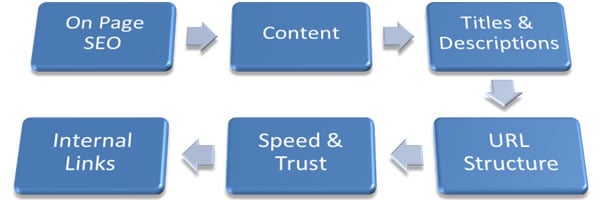
On Page SEO refers to settings you can apply on the website so that it is optimized for search engines. The most important on Page SEO Tips are:
  • Optimized titles and descriptions
  • Proper URL Structures
  • User friendly navigation (breadcrumbs, user sitemaps)
  • Optimized internal links
  • Text Formatting (use of h1,h2,bold etc)
  • Image optimization (image size, proper image names, use of ALT tag)
  • User friendly 404 pages
  • Fast loading pages
  • Google Authorship verification for all pages
  • Top quality fresh content (This is always the most important SEO factor!)
  • External links (no broken links or links to ‘bad’ sites)
You can find out more details about all the above tips in the SEO Tips for beginners article.

Off Page SEO

Off Page SEO
Unlike On- page SEO, off-page SEO refers to activities outside the boundaries of the webpage. The most important are:
  • Link Building
  • Social Media
  • Social bookmarking
We will look at these in detail below but first let me explain about the importance and benefits of off-page SEO.

Why is Off-Page SEO important?

Search engines have been trying for decades to find a way to return the best results to the searcher. To do that, they take into account the on-site SEO factors (described above), some other quality factors and off-page SEO.
Off page SEO gives them a very good indication on how the World (other websites and users) perceive the particular website. A web site that is useful is more likely to have references (links) from other websites; it is more likely to have mentions on social media (Facebook likes, tweets, Pins, +1’s etc.) and it is more likely to be bookmarked and shared among communities of like-minded users.

What are the benefits of ‘off-site SEO’ to website owners?

A successful off-site SEO strategy will generate the following benefits to website owners:
Increase in rankings – The website will rank higher in the SERPs and this also means more traffic.
Increase in PageRank – Page rank is a number between 0 and 10 which indicates the importance of a website in the eyes of Google. It is the system invented by Larry Page (one of Google’s founders) and one of the reasons that Google was so successful in showing the most relevant results to the searcher.  Page rank today is only one out of the 250 factors that Google is using to rank websites.
More exposure – Higher rankings also means greater exposure because when a website ranks in the top positions: it gets more links, more visits and more social media mentions. It’s like a never ending sequence of events where one thing leads to another and then to another etc.

Link Building

Link building is the most popular off-Page SEO method.  Basically by building external links to your website, you are trying to gather as many ‘votes’ as you can so that you can bypass your competitors and rank higher. For example if someone likes this article and references it from his/her website or blog, then this is like telling search engines that this page has good information.
Over the years webmasters were trying to build links to their websites so that they rank higher and they ‘invented’ a number of ways to increase link count. The most popular ways were:
Blog Directories – something like yellow pages but each entry was a link back to a website
Forum Signatures – Many people where commenting on forums for the sole purpose of getting a link back to their website (they included the links in their signature)
Comment link – The same concept as forum signatures where you comment on some other website or blog in order to get a link back. Even worse, instead of using your real name you could use keywords so instead of writing ‘comment by Alex Chris’,  you wrote ‘comment by How to lose weight’ or anything similar.
Article Directories – By publishing your articles on an article directory you could get a link (or 2) back to your website. Some article directories accepted only unique content while other directories accepted anything from spin articles to already published articles.
Shared Content Directories – Websites like hubpages and infobarrel allowed you to publish content and in return you could add a couple of links pointing to your websites.
Link exchange schemes – Instead of trying to publish content you could get in touch with other webmasters and exchange links. In other words I could link your website from mine and you could do the same. In some cases you could even do more complicated exchanges by doing a 3-way link, in other words I link to your website from my website but you link to my website from a different website.
Notice that I used the past tense to describe all the above methods because not only they do not work today, you should not even try them because you are more likely to get a penalty rather than an increase in rankings (especially when it comes to Google).

The birth of black hat SEO

Link building was an easy way to manipulate the search engine algorithms and many spammers tried to take advantage of this by building link networks which gradually lead to the creation of what is generally known as black hat SEO.
Google has become very intelligent in recognizing black hat techniques and with the introduction of Panda and Penguin they have managed to solve the problem and protect their search engine from spammers. Of course there are still exceptions but they are doing advances in every new release of their ranking algorithm and very soon none of these tricks will work.
To “follow” or “nofollow”
In addition to the above and in order to give webmasters a way to link to a website without passing any ‘link juice’ (for example in the case of ads), search engines introduced what is known as the “nofollow” link. This is a special tag you can add to a link (for example: “<a href=http://www.somesite.com rel=”nofollow”>Some Site</a>) that tells search engines not to count the particular link as a ‘vote’ to the referenced website.
This was done so that you can link other websites from yours without taking the risk of being caught for selling or exchanging links.
As a rule of thumb, you should add the nofollow tag on all your external links (within your pages) that go to websites you cannot trust 100%, to ALL your comment links, to ALL your blogroll links and to ALL banner ad links.

What is a good link?

So, if the above links are not useful, what is a good link?
First you should understand that link building it’s not only a matter of quantity but it is a matter of quality as well. In other words it no longer matters how many links are pointing to your website but it is more important from where these links are coming. For example a link from a normal blog does not have the same weight as a link from New York Times or a link from Matt Cutts blog (head of Google Quality team) is not the same as a link from my blog.
The obvious question is how to you get these links?
If you ask Google they will tell you that any links pointing to your website has to be natural links. Natural links are exactly what their name implies. A website owner or blogger likes another website or blog and naturally adds a link to his/her blog.
Does this happen in reality or is it another myth?
It certainly does but you have to try really hard to get to this point. Take for example this blog, there are many incoming links because other webmasters find the content interesting and I also link to other sites in my articles because I find their content interesting and want to inform my readers about it. This is natural link building where a link has more value from the readers’ point of you rather than the search engine point of view. The best way to attract links is to publish content (text, images, videos, infographics etc) that other people would like to link.
If natural links are what I have just described above, in which category do all other links belong?
They belong in the category of artificial links and by adopting such techniques you increase the risk for getting a manual or algorithmic penalty by Google.
Is guest blogging a valid way to build links?
Guest posting can be a valid way to get links back to your website provided that you don’t do it just for links and that you don’t overdo it. You can read these 2 articles to get a complete picture as to when to accept guest posts on your blogand when to guest post on other blogs.

Social Media

Social media is part of ‘off-site SEO’ and if you think about it, it’s also a form of link building. It should be noted that almost all of the links you get from social media sites are “nofollow” but this does not mean that they do not have any value.
Social Media mentions are gaining ground as ranking factors and proper configuration of social media profiles can also boost SEO.

Social Bookmarking

Social bookmarking is not as popular as it used to be in the past but it is still a good way to get traffic to your website. Depending on your niche you can find web sites like reddit.com, digg.com, stumbleupon.com, scoop.it and delicious.com (to name a few) to promote your content.

Conclusion

Off-page SEO is as important as on-site SEO. If you want your SEO campaigns to be successful you have to do both. When thinking about link building don’t take the easy way, but try to get links from hard-to-get places. The more difficult is to get a link, the more value it has.
In the past you could easily get thousands of links and rank higher but nowadays you have to do more than that.  My advice is to forget about link building all together and put all your efforts in making a great website, promote it correctlyand everything else will follow.

5 On-Page SEO techniques That’ll Boost Your Rankings

5 On-Page SEO techniques That’ll Boost Your Rankings (checklist included)
I have already talked about the relation between on-page and off-page SEO and also explained in detail what is off-page SEO.  For the purpose of giving beginners a complete picture, I will explain in brief a few basic terms.

Search Engine Optimization

Search Engine Optimization or SEO in short is a term that encapsulates everything you need to do to improve your web site’s ranking position in the various search engines. This includes configuration settings you have to apply on the website (that’s on page SEO) and techniques you can use outside the boundaries of the website (that’s off page SEO).

Is on-page SEO more important than off-page SEO?

To achieve maximum exposure in the search engines and keep your users happy you need both off-page SEO and on-page SEO. In my opinion on page SEO is more important and I will explain below why.
1) ‘Speak’ the search engines language: It makes more sense to start with on-page SEO and get it right rather than trying to convince search engines to give you better ranking with off page SEO. Search engines are computer programs (software) and they understand a particular language. With SEO and especially on page SEO you ‘speak’ their language and your goal is to help them understand what you website is about. In other words the more signals you can give them, the more are your chances of achieving better rankings.
2) On Page SEO is about the user as well: Never forget that your primary target is to keep your users happy. Off Page SEO may bring traffic to the website but if it is not setup correctly, if it is not user friendly the results will be disappointing.
3) Many websites get it wrong: It’s amazing but it is true that the majority of websites today are not optimized for search engines. Despite the plethora of information about SEO many website owners believe that it does not worth to even do SEO and they quit before starting. For those cases on-page SEO has a lot to offer both in terms of usability but in terms of traffic as well.
4) On Page SEO is sometimes all you need: If you are running a website for a small business and you need to get local customers searching for various terms on Google then on page SEO is all you need to do.
5) Off page SEO comes after on page SEO: In order to start thinking on how you can promote your website you need to be sure that the website is optimized and in good condition. So the first step is to work with on-site SEO first and then go off-site.

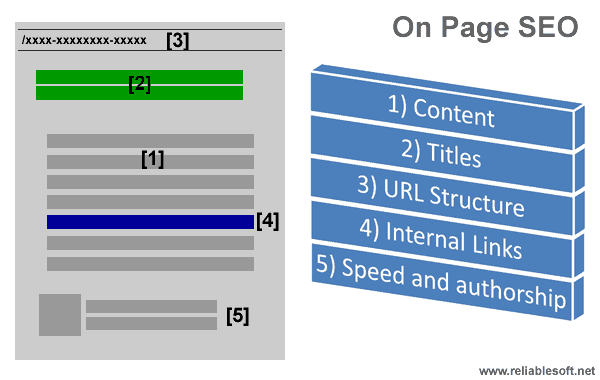
5 on page SEO techniques for better rankings

Now that the theory about SEO and importance of on-page SEO is justified, let’s move on to the practical part.
There are many on page SEO techniques and not only 5, but for the purpose of this post I will explain below what I think are the absolute settings you have to apply on your website today.  I strongly suggest that you also read (links will open in a new window):
10 SEO Tips for startups and small business owners
Top 10 SEO Copywriting tips for getting high rankings
10 SEO Mistakes that weaken your rankings
On Page SEO

1. Content comes first

A website with brilliant content can do great with or without SEO, a website with bad content will not survive with or without SEO, a website with good content can become even better with SEO!
So, what is considered good content?
Original Content (articles, text, images, videos, presentations, infographics, comments etc.) – No copies or re-writes of existing articles
Content published on your website first – Even if it’s your own content, if you have already published it on another website then it’s not good for your site.
Content that includes text as well – Try to have text to accompany your non-text content. For example if you post videos on your website try to add a text description as well. If you add images try to describe in words what the image is all about.
Content that is useful – Don’t publish content for the sake of publishing. Before hitting the publish button make sure that what goes live adds value to your website.
Content that is well researched – Users don’t want to read quickly prepared posts and neither does search engines. If you are writing about a certain topic or answering a question make sure that what you write is justified and covers both sites of a story. Long articles are proven to rank better than short articles.
Posting frequency – 2 things are important when it comes to posting frequency. First is to have fresh content on your website and second to establish a publishing strategy and stick to it.

2. Page titles, description and formatting

This is SEO 101 but very important as well. When search engines are reading your pages among the things they check includes the page title, the description of the page, the major headings and images. They do so because they need to understand what the page is all about and then based on other factors as well (off page SEO, domain authority, competition etc.), they will place your page in a position in their index.
Page titles – Each page must have a unique title that will help both search engines and users understand what the page is about. A page with title “On Page SEO Tips” is better than a page with title “index.html”.
Descriptions – The page description is what the searcher will see in the search engine results page. So it has to be descriptive, up to 150 characters and unique for each page. It’s your opportunity to advertise your page and convince the searcher to click your link and visit your website rather than selecting one of the other links.
Formatting – A page needs to be properly formatted. Think of it like a report which needs to have a heading (h1) and sub headings (h2). Important parts of the report are highlighted with bold, underline or italics.
Do not just throw text on the page but make sure that it is readable as well. Besides the formatting practices explained above you also need to use a good size font (at least 12px) and split the text into small paragraphs (max 4-5 lines).
Images – Images are important but these should not increase the loading time of the website. Best practices for using images:
1) Use original images. If you need to use an existing image from the web you need to reference the source.
2) Optimise the size of the images – the smaller the size (in bytes) of the image the better. Use yahoo smush it to reduce the size of an image without sacrificing the quality.
3) Use ALT tag to describe the image – This helps search engines understand what the image is about.
4) Use descriptive filenames – Don’t just name your image ‘image1.jpg’ but try to use descriptive filenames, for example ‘Man doing push-ups’.
5) Use a Content Delivery Network – If you have a lot of images in a single page you can use a CDN service (from Amazon or Google) that will make your page load faster. In simple terms your images will be hosted and served by a number of servers and this speeds up the loading process.
You can also read my seo tips for beginners article for more examples of optimized titles and descriptions and for best practices about the use of images.

3. URL Structure

The URL structure is an important part of on-page SEO. Whenever I talk about URL structure, I prefer to split it into 4 major parts:
1) Permanent links – Permanent links are the URL’s of each page. Good URLs should be less than 255 characters and use hyphens to ‘-‘separate the different parts.
2) Categories – Group your pages into categories to help users and search engines find what they want faster. It’s like having a warehouse with lots of uncategorised items versus a warehouse with all the items assigned to a dedicated category. You can have sub-categories as well but my advice is not to go over one level. For example a good category structure is:
Reliablesoft > Social Media > Facebook and not Reliablesoft > Social Media > Facebook > Tips
3) Breadcrumb – A breadcrumb is also important for all your pages because it allows users to navigate your website in a structured way since they always know where they are and how deep below the home page.
4) User Sitemap – One of your options in the main menu should be the User Sitemap. This is an html file that represents the structure of your website. Visit my sitemap for an example.

4. Internal linking

Linking to pages within your website is very important for SEO because:
1) It’s like building your own web: If you watch the nice tutorial by Google onhow search works, you will see that the first step a search engine spider will do is follow the links they find. So when they arrive at your page, if you don’t have any other links within the text they will read your page and go but if you have links pointing to other pages within your website they will take those into account as well.
2) It’s a way to let search engines know about your other pages: As explained above when search engines find a page with links, they will go and read those pages as well so you can use this technique to tell search engines about pages of your website they have not yet discovered.
3) It’s a way to tell search engines which are your most important pages:Every website has some pages that are more important than others. Internal linking is one of the ways to pin-point the most important pages by sending them more internal links.
4) It’s a way to increase time on site – A user that is reading your post is more likely to click on a link to read more about a certain subject and thus increase both the time spend on your website and the number of pages per visit.
Best practices for internal linking:
1) Don’t use keywords only for your internal links
2) Add internal links when they are useful for your reader
3) No more than 7-8 internal links per page (this is my opinion and not based on any research or studies)
4) If applicable you can also use ‘related posts’ at the end of each post for internal linking

5. Speed and authorship

Last but not least, 2 SEO techniques that are becoming more and more important especially after the release of penguin 2.0 (or 4.0 as some people like to say it): Speed and authorship.
Speed: Google is investing a huge amount of money to make the web faster. In every Google I/O someone will talk about the importance of speed and their desire to include the fastest websites in their index. In order to ‘force’ web site owners to take speed into account they have officially added speed as one of the ranking factors.
So, we know for sure that web site speed does matter when it comes to SEO and ranking. As a webmaster your job is to make sure that your website loads as fast as possible by taking into account Google’s recommendations.
Google authorship: Google is preparing for the next generation of Search and their effort is to rank higher webpages written by people who have authority on the particular subject. One of the ways to establish authority is by correlating the content you publish on the web with your Google+ profile. Then depending on how many followers you have and who follows you, your ranking may change.
Google authorship is still at its early stages but it’s gaining ground fast so you have to create a Google+ profile and bind the profile with your content.

On-Page SEO Checklist

If you have read the article up to this point, the main tips are summarized in the check-list below: (You can also download in PDF format for printing – On page SEO Checklist)
On-Page SEO Checklist
Content
1Content is original – copyscape checked?
2Content is first published on your website?
3Content has enough descriptive text?
4Content is well researched with references?
5Do you have a clear publishing strategy?
Pages Titles, description and formatting
6Page titles are unique for each page?
7Descriptions are unique and up to 150 characters?
8Text is properly formatted using H1, H2, Bold, Italics?
9Text is split into small paragraphs?
10Font size is easy to read on small screens (tablets) as well?
11Image size is optimized using smushit?
12All images have alt tags defined?
13Image filename is descriptive?
URL Structure
14Permanent links use ‘-‘ as separator ?
15Website pages/posts are grouped into categories?
16There is breadcrumb on all posts/pages?
17There is an HTML User Sitemap?
Internal Links
18Pages have internal links?
19There is a ‘Related posts’ section at the end of each page?
20Internal links use both keyword and non-keyword anchor text?
Speed and Authorship
21Website scores more than 90% when checked by Google page speed insights?
22Google Authorship is implemented for each and every post/page available on the website?
For website owners that are new to SEO or simply do not have the time to deal with web site optimization, you can always hire a trusted SEO firm to do the work for you. Have a look at our great range of SEO packages, suitable for every online business, customized to your own needs and requirements and at competitive prices.

Monday, 15 June 2015

Micro Blog Guide to Success and Microblogging Tips


blogpic2
Although blogging can be one of the most effective ways to market your website, a critical shift has taken place that allows content writers to supplement their lengthy, formatted, traditional blogging with micro posts, also known as microblogging.
Microblogging v Traditional Blogging
Microblogging differs from traditional blogging in that its content is generally smaller in actual and aggregated file size. A micro blog allows users to exchange small bits of content like short sentences, singular images and video links. A small, direct micro post can be used as a supplement, but not as a primary source of blogging. With that being said, there are major benefits of microblogging, if done correctly. A micro post, although they are generally less than 200 words, should still have meaning behind the content. This means that keywords and optimization should still be considered when putting together a micro post.
Unlike traditional blogging, microblogging is usually simple topics, such as, “what’s on your mind” or “what I’m doing right now. When utilizing microblogging sites correctly, this could alimentally help bring brand awareness and traffic to your website. The goal with a micro post is to let potential clients/customers know about what is going on within your business in that moment. The advantages of microblogging could be to sell and market products or even get customer/client feedback. The audience on your microblogging sites should consist of current clients, repeating clients and potential clients.
Creating Your Micro Blog and Micro Posts

When setting up your micro blog you will want to remember to reveal as much information as possible about yourself and your business. The idea behind this is to allow your clients or potential clients to find you and learn more about you and the products or services you offer. Also, allowing your followers to leave feedback about your service or product is a nice way for you to stay connected with your audience. Encouraging your audience to like, re-blog or follow your content will help spread the word about you and your business/brand. Keep in mind, microblogging is all about being social, so follow the users that blog about similar topics. The idea behind this type of blogging is to not just simply sit back, relax and expect fans to come to you. The odds of that happening are very slim to none. You must get involved in your blogging community and reach out to potential fans and followers to be noticed.
When choosing a topic to discuss, always keep in mind that you are not to constantly push your business or product all the time. Although you want to use microblogging sites in a way that it is beneficial to your business, remember that people don’t want to be “sold” all the time. Break up your content a bit. Giving your fans something funny to read every so often will interest them to read your post more often. You can also post photos and videos on these microblogging sites. When posting a video or picture remember to include a little bit of text and tags for every micro post you make. This way your micro posts show up in search engine results.
Get the most out of your micro posts by following these microblogging tips:
  • Separate your personal micro blog from your business’ micro blog
  • Consider keywords when putting together blogging content
  • Keep it short, remember microblogging posts should be around 200 words
  • Micro posts should be relevant to your area of expertise
  • Use hashtags (#) in front of keywords that sum-up what your post is about
  • Try to post content to your micro blog every day, consistency is key
  • When choosing a username, make it a meaningful account name
  • Stay on track with your micro posts
Top Microblogging sites
  1. Twitter.com
  2. Tumblr.com
  3. Friendfeed.com
  4. Plurk.com
  5. Facebook.com
  6. Heello.com
  7. Identi.ca
  8. Dipity.com
  9. Newsvine.com
  10. Flattr.com

Saturday, 28 March 2015

How to Improve Your Search Engine Ranking on Google

by Christopher Heng, niviinfotech.com
When I first started as a webmaster, there were numerous search engines around. Nowadays, though, we are, for the most part, left with only Google and Bing, with Google providing the majority of visitors to most websites, including thesitewizard.com. This article provides some tips on how you can improve the position of your site in the search engine results on Google.

Improving Your Site's Placement on Google's Search Engine Results

Google ranks a page according to a large number of factors. Exactly what these factors are is apparently a trade secret, although there are number of well-known things that contribute to the ranking of a page.
  1. Links Pointing to Your Website

    One of the factors that contribute to a web page being considered "important" is the number of links pointing to that page. For example, if your page has 100 quality links leading to it, it will be ranked higher (in Google's estimation) than one that only has 20.
    But what are "quality" links"? These are links from other popular pages, that is, pages that have, themselves, many (quality) links pointing to them. (Yeah, I know. My definition is circular. And it's possible that the search engine has other factors that determine the quality of a link.)
    Anyway, in general, since Google ranks your pages according to the number of links pointing at your page, your site will do better if it has more links pointing to it.
  2. Your Title Tag

    Google seems to give weight to the title of your page. By title, I mean the text that is sandwiched between the HTML <TITLE> tags in the <HEAD> section of your web page. If you use a Web editor that automatically inserts a title like "New Document", remember to change it to some meaningful text with your keywords inside to reap the benefit of this feature. Otherwise, your site will only feature in the search results when someone looks for "New Document".
    Note: by "keywords", I mean the words people will use when searching for your site. For example, if your site sells bicycles, then one keyword for it would be "bicycles", since that's the word you'd expect people to use when searching for bicycles.
  3. Your Page Must Have the Words You Think People Will Search For

    Besides the title tag, if you want your website to feature in Google's results when someone searches for a set of words, say "Widget X", those words must actually occur on your page. Think about it from the point of view of a search engine. If you don't put the words "Widget X" somewhere on the page, how is the search engine supposed to know that the page deals with that topic? The search engine is not a human being who can draw inferences from the general tone and content of the page. Even if it can handle some synonyms, you're going to compete with other sites who have specifically placed those words on their site.
    I know this point seems self-evident (once you've come across it). However, from experience, many webmasters (me included) don't seem to realise ("realize" in US English) that when they are first starting out.
  4. Keyword-laden Links

    According to a paper published by one of Google's founders, if the links pointing to your page has some words in them, those words will be regarded by Google as an additional indication of the content of your page. For example, a link with the text "Cheap Shoe Store" pointing at your page will cause Google to think that your page is relevant when someone searches for "cheap shoe store".
    However, my recommendation is that if you think a particular set of words is relevant to your site, don't rely on some random site on the Internet to link to you with those words. Put them directly on your page.

Other Google Tips


  1. Use a Search Engine Site Map

    Although not strictly necessary, if you find that Google (or Bing, for that matter) is not able to discover some pages on your website, create a site map. I don't mean the type of user site map that you see on thesitewizard.com (which is primarily meant for human beings), but a site map that is specially designed for search engines. While such a site map does not guarantee that Google will index and list every page, it will at least help it discover those missing pages if your site design is such that it has impeded the search engine from finding them before.
  2. Check Your Robots.txt File

    Like all respectable search engines, Google will read and obey a special text file on your website called the "robots.txt" file. You can control where search engines are allowed to go with this file. A corollary of this is that you can also inadvertantly block the search engine from going to certain parts of your site. It's generally a good idea to create a robots.txt file for your website, even if it's an empty file with zero bytes (which means that search engines are allowed to index everything on your site).
  3. ALT tags on Images

    If you have been placing images on your website without bothering to place ALT tags, now is a good time to add them. An "ALT tag" (or alternate tag) is just a way of putting a brief description (using words) of what your picture shows. They are needed by the software used by the blind so that they know what's in the picture. Since all search engines, including Google, are essentially blind, relying on words, they also need the ALT tag. The description you give in the ALT tag is treated like the words occurring on your web page, although I don't know if they are regarded as being of equal importance.
  4. Be Careful Whom You Hire

    Google's use of links to rank a website has at least 2 side effects on the Internet. Firstly, people seeking to rank higher have engaged companies to furnish them with zillions of links. Those companies presumably set up a whole bunch of sites for the sole purpose of linking to their clients. Secondly, as a response to this, Google has retaliated (and continues to do so) by discrediting links from such "link networks" as well as penalising the sites that pay them for the service.
    It's apparently possible to run afoul of this even if you have no intention of buying links. For example, if you are not careful, and have engaged a search engine optimisation ("SEO") company to improve your site's performance on Google, and they use a link network, your site may inadvertantly get caught in the crossfire of this ongoing war between the link networks and Google.
  5. The META Keywords Tag is Ignored

    The Google search engine ignores the META keywords tag, and has always done so. If you have received spam from some wannabe search engine optimisation "specialist" telling you that you need to add this to your site, think twice about hiring him/her, since this recommendation already gives you a hint of the extent of his/her knowledge.
  6. Dynamic Pages and Google

    Like all modern search engines (yeah, all 2 of them), Google is able to index dynamically generated pages, so long as a link to those pages exists somewhere. For example, a page like "http://example.com/showstuff.php?page=19" can be indexed by Google, so you don't really need to rewrite your URLsif you can't be bothered.
    If you have a dynamically generated page that you think should be indexed, just make sure you put a link to it somewhere on your site. This applies to all web pages that you want indexed anyway, so even if you don't understand what I mean by "dynamic page", it doesn't matter. Make sure that all the pages of your site can be found through at least one link on your site. If they are not linked to from somewhere, no one will be able to find it, neither Google nor your visitors (unless they are psychic).
  7. Disabling the Caching of Your Page Will Not Affect Your Page Rank

    In ancient history, it was claimed that Google would penalise pages that forbade it from caching their pages. As you know, the Google search engine caches the pages it indexes unless otherwise instructed. To avoid problems with people who dislike this, they allow sites to instruct Google not to cache those pages.
    Google have ("has" in US English) apparently publicly denied that disabling caching would affect the page's ranking in any way. I tend to believe their claim.
  8. Don't Waste Your Time With The Google Toolbar's Page Rank

    In ancient times, you could add something known as the Google Toolbar to your web browser, and get something known as the "Page Rank" shown for any site you visit. In those days, the "Page Rank" would give you an idea of how important Google thought your site was.
    Nowadays, the Page Rank is only one of apparently zillions of factors used by Google in ranking a website. They also discourage people from focusing on the Page Rank, and as a result, do not actually update the rank displayed on the toolbar in a timely fashion. (That is, the rank shown is often many months out of date.) In fact, I'm not sure if the page rank is even shown on the toolbar anymore.
    In other words, it's not worth your time to install the toolbar.